
When I was younger, I saw the world as a place overflowing with opportunity. My mother often told me that I could do anything. Through some skepticism, I’d stand on her belief in me. Part of what made believing that easier was because time felt infinite. I remember thinking that even if I made mistakes, there would always be enough years left to fix them, and that with time, I might be able to approach realizing the potential my mother saw in me.
For a long time, I lived that way: full of curiosity, driven by a quiet confidence that the world was open and waiting. After finishing high school abroad and college back in the States, I moved to Japan.
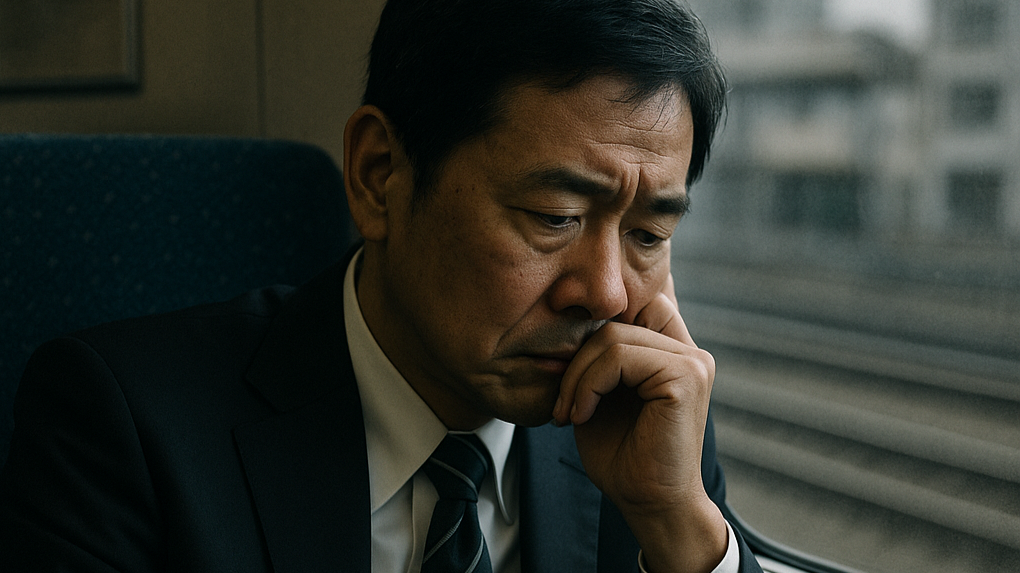
It was the late noughts, but before the financial crisis. Back then, I’d sometimes encounter people in Japan (mostly men in their 40s and 50s), sitting silently on trains, faces weathered and tired. Interactions with them in town often were unpleasant. They were curt and sometimes uncouth. They seemed to be angry with everyone and about everything. I remember thinking, “What happened to them that’s made them so cold and bitter?”
I couldn’t at all understand it then; now I do.
Somewhere in life, something shifts. For me, it started right around my 40th birthday. The illusion of endless time disappears. You start realizing that, statistically, it’s halfway through—you’ve potentially lived more life than you have left.
This strikes me most deeply when I think about my dad, who died at 70. If I’m on the same trajectory, I’m already a few years into my second act. There’s something profoundly sobering about that. You look at life differently when that trope about life being short becomes visceral.
But it’s not just about the brevity of life. You start seeing the world differently. Some of the people you admired most—heroes, superstars, mentors, family members—start to show who they really are under their gilded façades. Once dear friends disappoint you. You lose people you love deeply and watch others move from sprightliness to old age. Your world can become harsher, less idealistic, and shallower. Everything can start to feel like a transaction.
All of this can fundamentally change a person.
I started to better understand those Japanese middle-aged men on Tokyo trains. They were carrying the invisible weight of time—the realization that not all dreams come true, that effort doesn’t always lead to reward, and that life can indeed feel as Hobbes described: solitary, poor, nasty, brutish, and short. If we’re not careful, we too can start to become one of those ojisan.
If you’re in this stage of life, you know how heavy it can feel. Your parents are aging. Your kids are growing up, and you’re both proud and terrified for them. Your partner is going through change with, but also independently from, you. And in the midst of all of this is your career. You look at where you are and may say: I thought I’d be further along by now. Between all of the responsibilities and unrealized dreams, we can feel like throwing in the towel and just coasting.
Middle age can be perilous. But it can also be a wake-up call. You’re going to age, and you have no choice about it. But you get to decide who you’ll become from here, and whether you’re going to stop growing or put in the effort to evolve into a better version of yourself in spite of how nasty the world can be at times. At some point, you have to stop auditing your past and start investing in what comes next. The lessons of the past are valuable, but when overindulged, they can weigh us down. What if, instead of punishing yourself for what you didn’t do, you honored the fact that you made it here and that you still want more for yourself, even if you’re not sure how to get it yet?
That, to me, is where transformation starts.
If any of this resonates with you, know that you’re not too old, and it’s not too late. If you’re reading this, it likely means you’re already among the most fortunate people on this planet. There are many people who have less than you who have been able to turn their lives into something amazing. You can reform your life.
The second half of your life truly starts when you stop being afraid of it and start living it with purpose.
Though I’m not that little boy from Pontiac, Michigan anymore, I still hold on to much of the optimism and hope from that time. What I’ve learned about middle age is that your potential doesn’t erode unless you stop using it to propel you forward.
Middle age can be hard and messy. But it can also be an honest, powerful, liberating stage of life. You owe it to that kid inside of you who once believed the world was full of possibility to give them the future they deserve.